Yellowtail Fishing
Yellowtail Fishing in Southern California - Techniques & Seasons

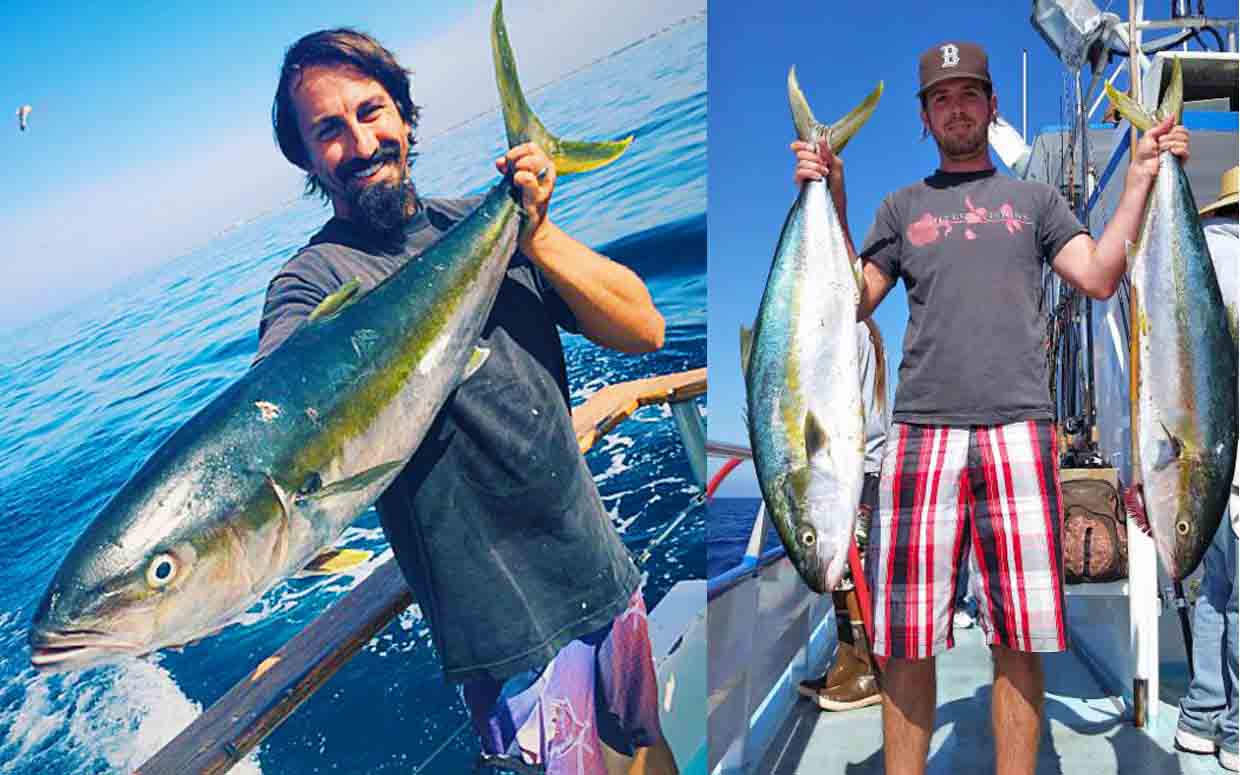
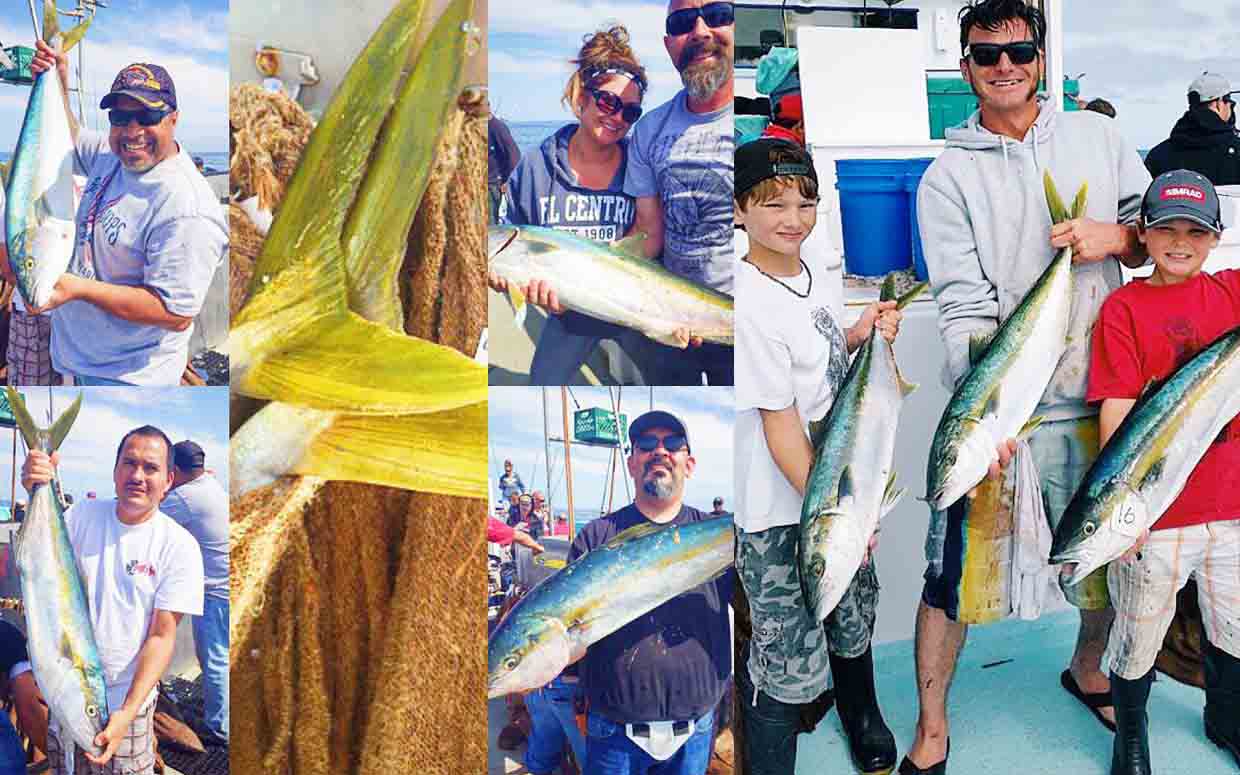
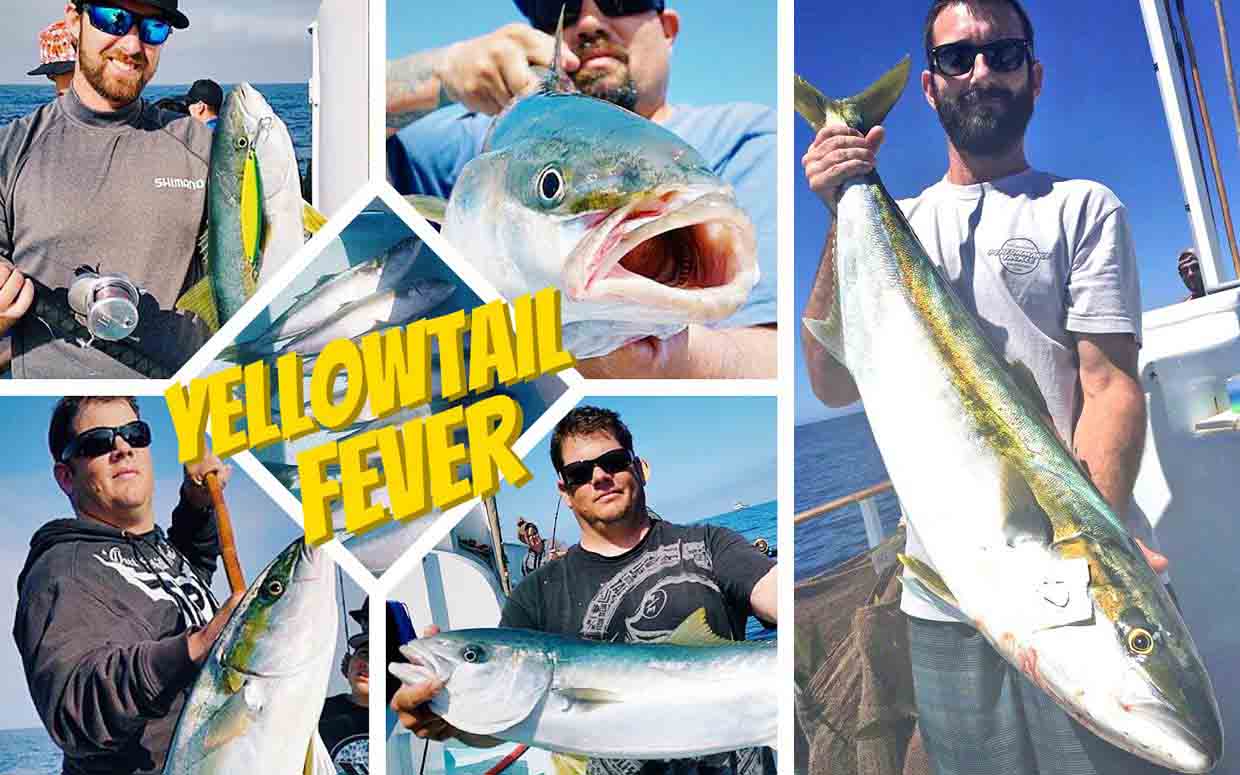
Yellowtail fishing usually begins sometime in March and continues to November. Although the same species of yellowtail is caught throughout, techniques and locations differ with the seasons. Newport Landing’s sportfishing trips can all catch yellowtail from ½ day trips to overnight and longer trips. Typically the longer trips have more consistent catches and in greater numbers, but this is not always the case.
Spring Yellowtail Fishing
Spring yellowtail fishing usually begins in March at one of our local islands which is either San Clemente Island or Catalina Island and occasionally Santa Barbara Island. Either overnight or ¾ day trips are the best trip lengths to catch spring yellowtail. During warmer water years yellowtail will bite fin baits such as sardines, anchovies, and even mackerel. During normal to colder water spring periods live squid may be needed to get the yellowtail in the biting mood. Yo yoing an iron jig can also be effective as well as sight casting to breezing schools of yellowtail on the surface.
Here are some helpful tips for each style of fishing yellowtail:
- When fishing with fin baits it is very important to select healthy bait and as carefully as possible hook your bait either in the nose sideways, collar area, or even belly area depending on how you want your bait to swim. Hooking the bait through the nose sideways will cause your bite to swim slightly side wards and at angle to the boat. Hooking it in the collar will also cause the bait to swim sideways as well as slightly downward. Hooking the bait in the belly will cause the bait to swim downward and away from the boat (use when wanting to have your bait go deep). If you are unsure on how you want to present your bait, hook it threw the nose sideways as this will be the easiest and best for the longevity of your bait.
- Once you have cast your fin bait try to let it swim as natural as possible this means letting it take line out and not pulling on it or creating resistance against the bait. If your bait is staying put and not moving much you can give it a twitch to wake it up. If that doesn’t liven your bait, then it is time to change your bait. Change your bait almost every cast. This is very important as strong bait will get the most bites of yellowtail and almost all other game fish. The only time this doesn’t apply if you have limited bait or a limited type of bait in which case try to make the most of each bait.
- When fishing live squid techniques change quite a bit. First you can use a live squid for many casts as a yellowtail will be just as likely to hit an almost dead squid as a lively one. In fact there are times when fresh dead squid is preferred to live squid. There are not too many different ways to hook a squid as you want to hook it in the upper cone area away from the head. Ideally hooking it and then bring the hook back again so it is securely attached. Lots of smaller fish will pick at your bait and if it is not securely attached it will be taken off the hook very quickly by the smaller fish. A large hook such as 2/0 -4/0 is ideal as yellowtail will not be hook shy like they can be with fin bait. When fishing with live squid be prepared to fish both deep and shallow or close to the surface. Sometimes the bite is right on the bottom and other times it will be in the middle of the water column or on the surface. Keeping an eye on where anglers are getting bit is the key to using the right weight for the given situation. Your live squid should not run too much even if fishing without any weight so if it starts really moving it is a fish.
- Lastly fishing iron jigs that run deep, medium weighted, and even surface iron can be very effective. This type of fishing takes endurance and confidence. When there are no visible fish casting your jig a good distance from the boat and then letting it sink for varying times allows you to cover different depths and with different angles of retrieves creating different presentations. The key when fishing a jig is to keep it moving. Usually the faster the better. Surface iron maybe the exception as there is times when a slower presentation works. When using an iron jig you can fish along the side and even in the front of the boat and cover a lot more area than by bait fishing. Most of your bites will come while reeling it back and you need just keep reeling as you get bit. The reeling tension and the fish should set the hook. Make sure you hooks are super sharp before you start fishing. When yellowtail are breezing on the surface a surface iron can be really effective and you can cast into the school before they are disturbed by the boat. Long casts are necessary and definitely practice before attempting this. When bit, it can be incredible with most bites being very visible and quite aggressive. Remember to always watch behind you as you cast as iron jigs are the number one cause of accidents while fishing.
Spring yellowtail fishing is known for large yellowtail with some of the largest yellowtail of the year caught at this time. Good numbers can be caught as well but with the average size much larger, many more fish are lost for a number of reasons all due to the size of these fish.
Summer Yellowtail Fishing
Summer yellowtail fishing is known for huge quantities of yellowtail and overnight, ¾ day, and even ½ day trips can target these game fish. Unlike in the spring, yellowtail during the summer months usually June, July and August can be found in a number of different areas from floating kelp paddies any place in the ocean, to local islands, to coastal areas and reefs. Most of the summer yellowtail are caught with either live bait or artificial jigs. The same techniques for using both the live bait and iron jigs in the spring apply. Lighter line for coastal and kelp paddy fish usually means more bites and a decision needs to be made between more bites and getting more fish to the boat in terms of line selection.
Many times the yellowtail will be mixed in with other game fish especially at the islands or along the coast. This can be really exciting as you never know what you might catch. When encountering barracuda mixed in make sure to retie your hook at any sign of line damage. The last thing you want to happen is too hook a monster yellowtail only to lose it to damaged line. This time of year is known for large numbers of yellowtail with 100 yellowtail a trip along with hundreds of other fish possible. Fishing weekday’s increases your odds as less boat pressure typically leads to better and longer bites. Yellowtail will bite as well in the afternoon as in the morning, so don’t despair if by mid morning you have not gotten a yellowtail. Newport Landing even runs after ¾ days just for the afternoon bite and this can be a great trip to be on with little boat pressure in fishing areas and fish less accustomed to fishing then the more traditional morning hours. Great option for Catalina Island.
Fall Yellowtail Fishing
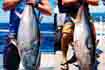
Fall fishing is a mixture of both spring and summer. Many consider it the peak time for yellowtail fishing overall for both quantity and quality. Local ½ day trips can have 30-50 yellowtail a trip, and ¾ day trips have caught over 200 yellowtail in a days fishing during good yellowtail years. Overnight and multiple day trips are as close to no miss as fishing gets on yellowtail. 1 ½ day trips to offshore banks can result in limit style fishing on yellowtail (10 fish per person) with yellowtail of 30 pounds or more being the average size fish. And these fish are known for being the toughest yellowtail to fight. Light line is not recommended for these fish as they head into the reef as soon as they are hooked. The Cortez Bank & Tanner banks are the prime offshore banks for fall yellowtail fishing. 30 pound or 40 pound test is the norm when fishing these banks and stout rods a must. You don’t have to go on an overnight or longer trip to get into yellowtail and Catalina Island, offshore kelp paddies, and coastal reefs can all be very good. Although yellowtail on the coast do not usually average 30 pounds, very large specimens can be encountered mixed in with 12-18 pound average sized fish. Techniques for catching fall yellowtail are very similar to both spring and summer with live bait, iron jigs, and later in the fall live squid all being very productive. When both live squid and fin bait is present don’t rule out using fin bait as yellowtail may not be feeding on squid yet and fin bait may generate more bites. Many fishermen think by September fishing for yellowtail is over, but Oct and November can be great months.A few other suggestions/recommendations for targeting yellowtail
Finally before coming out on your fishing trip it is always a good idea to give Newport Landing a call and find out what bait or baits are available as determining the proper gear for your trip may depend on this knowledge. If you are renting gear then you need not worry about this as several styles of gear can be rented which should be fine for all styles of fishing for yellowtail. For live fin bait, two rods are recommended. One should have 15-20 pound test and a very good reel with functioning drag. The second setup should be 25-30 pounds test on a moderate sized reel, once again with a good drag system. Much of your fishing will be done with the lighter set up for the ½ day and ¾ day trips, but when they do bite it can get very active and having the heavier setup will get more fish into the boat during this time. One of our toughest game fish makes this a favorite for many anglers. Have fun.